
Phytomem One Review: Does It Really Improve Memory, Focus & Mental Clarity?
Phytomem one Product Overview
| Phytomem One – Quick Review | Details |
|---|---|
| Product | Phytomem One |
| Category | Brain & cognitive wellness supplement |
| Format | Tablet/capsule depending on the current product listing |
| Main purpose | Memory, focus, mental clarity and general cognitive support |
| Formula | 10 listed ingredients |
| Key ingredients | Saffron, fucoxanthin, fucoidan, oleuropein, berberine, Ceylon cinnamon, banaba/corosolic acid, kudzu, Morosil and xylitol |
| Stimulants | Marketed as stimulant-free |
| Manufacturing claim | Made in the USA / GMP-compliant facility according to product marketing |
| Suggested use | Generally marketed as one serving daily |
| Money-back guarantee | Product pages currently advertise a 60-day guarantee |
| Price advertised online | Approximately $49–$79 per bottle depending on package |
| Where To Buy | Phytomem One Official Website |
| Best suited for | Adults looking for nutritional support for cognitive wellness rather than a treatment for memory disorders |
Phytomem One is marketed as a daily brain-support supplement intended to help with memory, concentration, focus and mental clarity. Its formula combines botanical extracts with compounds associated with antioxidant and metabolic support. Product pages identify ten ingredients, including saffron, fucoxanthin, fucoidan, oleuropein, berberine HCl, Ceylon cinnamon, corosolic acid, kudzu flower extract, Morosil and xylitol.
The interesting part of Phytomem One is its dual-support concept. Instead of relying on a traditional stimulant such as caffeine, the formula is promoted around two broad ideas: supporting cellular/antioxidant defenses and supporting metabolic processes involved in energy utilization.
However, it is important to distinguish ingredient research from product research. I found research on several individual ingredients, but that is not the same as a randomized clinical trial proving that Phytomem One itself improves memory.
What Is Phytomem One?
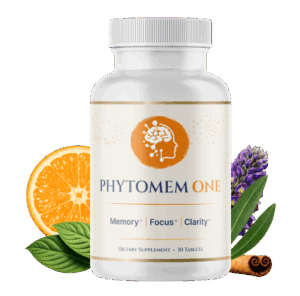
Phytomem One is marketed as a dietary supplement for adults who want everyday support for memory, focus, concentration and mental clarity.
According to product information, the formula contains ten ingredients:
- Saffron extract
- Fucoxanthin
- Fucoidan
- Oleuropein
- Berberine HCl
- Ceylon cinnamon bark
- Corosolic acid from banaba leaf
- Kudzu flower extract
- Morosil red-orange extract
- Xylitol
The product is marketed as non-stimulant and plant-based. One current product page says the product is made in the United States in an FDA-registered, GMP-compliant facility and describes the formula as non-GMO and vegetarian-friendly.

Is Phytomem One a Medicine?
No.
Phytomem One is marketed as a dietary supplement. It should not be considered a replacement for medical evaluation, prescription treatment or a diagnosis of memory problems.
This distinction is important because the FDA explains that dietary supplements are regulated differently from drugs and are not pre-approved by the FDA for safety and effectiveness before marketing.
How Does Phytomem One Work?
The Antioxidant and Cellular-Support Concept
The formula contains several botanical ingredients associated with antioxidant or cellular processes.
Saffron, olive-leaf compounds, seaweed-derived compounds and citrus extracts have all been investigated for biological effects in laboratory or human studies.
The theory behind the formula is that supporting normal cellular defenses may help maintain healthy brain function.
That is biologically plausible, but it should not be interpreted as proof that Phytomem One can reverse cognitive decline.
The Metabolic-Support Concept
Phytomem One also contains berberine, cinnamon, corosolic acid and other compounds associated with glucose and metabolic pathways.
Berberine in particular has been extensively researched for metabolic outcomes. An overview of systematic reviews published in 2025 found evidence of potential effects across several metabolic conditions, although the quality and certainty of evidence varied. PubMed
This is relevant to the product’s formulation, but again, research on berberine is not research on Phytomem One.
Why the Finished Product Matters
A common mistake in supplement advertising is to take research on individual ingredients and automatically apply it to a finished formula.
For example:
Ingredient A has been studied → therefore Product A works.
That conclusion is not scientifically justified without testing the actual finished product at the actual dose.
For Phytomem One, this is one of the biggest limitations consumers should understand.
Phytomem One Ingredients
Saffron Extract
Saffron is one of the more interesting ingredients in the formula.
Clinical research has investigated saffron for cognitive function, particularly in people with mild cognitive impairment or Alzheimer’s disease.
One randomized placebo-controlled trial involving people with mild-to-moderate Alzheimer’s disease reported better cognitive outcomes with 30 mg/day saffron over 16 weeks compared with placebo. PubMed
A systematic review of randomized trials also found promising results but emphasized limitations in the evidence and the need for larger, higher-quality trials. PubMed
Therefore, saffron has some human evidence behind it, but that does not establish Phytomem One as a treatment for dementia.
Fucoxanthin
Fucoxanthin is a carotenoid associated with certain types of marine algae.
Interestingly, human research exists here too. A 12-week randomized placebo-controlled study in older adults investigated a microalgae extract containing fucoxanthin and reported some positive findings involving memory, attention and executive-function measures. However, the researchers also noted study limitations, including sponsor-related conflicts of interest. PubMed
This is promising but still early evidence.
Fucoidan
Fucoidan is a polysaccharide found in brown seaweed.
It has been studied for antioxidant, immune and cellular effects, but evidence directly demonstrating that oral fucoidan improves everyday memory in healthy adults remains much less established than the marketing language surrounding cognitive supplements may suggest.
Oleuropein
Oleuropein is a phenolic compound associated with olive leaves.
It has attracted research interest because of antioxidant and metabolic properties. However, laboratory or mechanistic evidence should not automatically be interpreted as evidence that an olive-leaf supplement will improve memory in humans.
Berberine HCl
Berberine is a well-studied plant alkaloid.
Most of the human research has focused on metabolic outcomes rather than memory enhancement.
A recent review of berberine-drug interactions also emphasizes that berberine is biologically active and should not automatically be assumed to be harmless simply because it is plant-derived. PubMed
This is particularly relevant for people taking medications.
Ceylon Cinnamon
Cinnamon has attracted attention in cognitive research.
A systematic review examined 40 preclinical and clinical studies concerning cinnamon and cognition. Most of the included research was preclinical, while only two studies were clinical, so the authors’ findings should not be treated as proof that cinnamon supplementation reliably improves memory in humans. PubMed
Corosolic Acid / Banaba Leaf
Banaba leaf contains corosolic acid, a compound that has been studied primarily in relation to glucose metabolism.
Its inclusion supports the product’s metabolic-support positioning, but evidence that it independently improves memory in humans is limited.
Kudzu Flower Extract
Kudzu contains several bioactive compounds and has been studied for metabolic and other biological effects.
However, there is not enough high-quality evidence to say that kudzu flower extract alone produces a meaningful improvement in memory or concentration.
Morosil
Morosil is a branded extract derived from Sicilian blood oranges.
It is more commonly discussed in connection with metabolic and body-composition research than with cognitive enhancement.
Consequently, its role in a brain-support formula should be considered exploratory rather than proven.
Xylitol
Xylitol is a sugar alcohol commonly used as a sweetener.
It does not provide evidence that the product itself improves cognition.
Benefits of Phytomem One
Supports Everyday Mental Clarity
The product is designed around supporting normal cognitive function and mental clarity.
This is a reasonable wellness-oriented positioning, provided it is not interpreted as a promise to treat a medical condition.
May Support Focus and Concentration
Several ingredients have biological properties that could theoretically contribute to general cognitive wellness.
However, there is no strong evidence that the finished Phytomem One formula produces a clinically meaningful improvement in concentration.
Provides a Multi-Ingredient Formula
One advantage of the formula is that it does not rely on a single botanical.
It combines ingredients with different areas of research, including antioxidant, metabolic and cellular pathways.
Stimulant-Free Positioning
The product is marketed as stimulant-free.
For people who do not want caffeine-based products, that may be appealing.
Convenient Daily Routine
Product information describes a simple daily routine, which can make consistent use easier than complicated supplement schedules.
Possible Side Effects and Safety
Phytomem One should not automatically be considered risk-free because its ingredients are described as natural.
Possible Digestive Effects
Botanical compounds and berberine can cause gastrointestinal symptoms in some people.
Potential issues may include:
- Nausea
- Abdominal discomfort
- Diarrhea
- Constipation
- Bloating
Individual tolerance varies.
Medication Interactions
This is one of the most important considerations.
Berberine has documented potential for interactions with medications, and a 2026 review specifically examined mechanisms and clinical relevance of berberine-drug interactions. PubMed
Anyone taking prescription medication should speak with a doctor or pharmacist before using a berberine-containing supplement.
Pregnancy and Breastfeeding
People who are pregnant or breastfeeding should consult a qualified healthcare professional before using a multi-ingredient supplement.
Existing Medical Conditions
People with diabetes, blood-sugar problems, liver or kidney conditions, or other chronic medical conditions should discuss the formula with a healthcare professional before taking it.
The FDA likewise advises consumers to discuss dietary supplements with healthcare professionals because supplements can interact with medications or medical conditions. FDA
Phytomem One Consumer Reports
Consumer feedback found on product and promotional websites is generally positive.
Some testimonials describe improvements in:
- Mental clarity
- Focus
- Recall
- Following conversations
- Mental energy
- Reduced feelings of brain fog
For example, one product site publishes testimonials from customers describing clearer thinking and improved recall.
However, there is an important limitation.
Are These Reviews Independently Verified?
Not necessarily.
Testimonials displayed on a manufacturer’s or affiliate-style sales page should not automatically be treated as independently verified consumer research.
I would therefore classify the available online testimonials as anecdotal evidence, not clinical evidence.
That distinction is particularly important when a website displays large numbers of “verified customer” ratings without providing independently auditable review data.
Phytomem One Complaints
Some online criticism focuses on the gap between the marketing claims and the available product-specific research.
One recent review of complaints specifically highlighted two issues: marketing language that may overstate what the ingredients can do and the absence of a clinical trial testing the finished Phytomem One formula.
Main Concerns to Consider
| Potential Complaint | What It Means |
|---|---|
| Limited product-specific research | Individual ingredients have research, but the finished formula lacks strong clinical validation |
| Dose transparency | Some public pages list ingredients without clearly displaying the amount of each active ingredient |
| Strong marketing claims | Some sales pages make claims that go beyond established clinical evidence |
| Testimonials | Testimonials are anecdotal and may not represent typical results |
| Online-only purchasing | Buyers need to verify the seller and return terms |
| Price variability | Different sites advertise different prices |
A third-party ingredient analysis has also raised concerns about the lack of publicly displayed milligram quantities for individual ingredients.
That is a legitimate issue because knowing the ingredient name alone does not tell you whether the product contains an amount comparable to the dose studied in clinical research.
Phytomem One Scam or Legit?
Is Phytomem One a Scam?
There is not enough evidence to simply label Phytomem One a scam.
It is presented online as a dietary supplement with a defined ingredient formula, product pages, pricing and a refund policy.
At the same time, consumers should not interpret “legitimate product” as meaning “clinically proven to work.”
Those are two completely different questions.
Why the “FDA Approved” Language Needs Caution
Some Phytomem One marketing pages use phrases such as “FDA approved” or “FDA registered facility.”
These phrases can be misleading if consumers interpret them to mean that the supplement itself has been approved by the FDA.
The FDA states that dietary supplements are not approved for safety and effectiveness before they are marketed. FDA
So a manufacturer using an FDA-registered facility is not the same thing as the FDA approving Phytomem One.
My Assessment of the Scam Question
| Question | Assessment |
|---|---|
| Is it presented as a real dietary supplement? | Yes |
| Does it have identifiable ingredients? | Yes |
| Does ingredient research exist? | Yes |
| Is the finished formula clinically proven? | Not established |
| Is it FDA-approved as a medicine? | No |
| Should disease-treatment claims be trusted? | No |
| Should consumers verify the seller and refund terms? | Yes |
Phytomem One Price, Discount and Sale
Current online product pages advertise different package prices.
One page currently lists approximately:
| Package | Advertised Price |
|---|---|
| 1 bottle | $79 |
| 3 bottles | $59 per bottle |
| 6 bottles | $49 per bottle |
The same page states that the three- and six-bottle packages receive free U.S. shipping and that purchases are covered by a 60-day money-back guarantee.
Prices and promotional offers can change, so readers should verify the current checkout price before purchasing.
Is the Discount Worth It?
A discount is only meaningful if the original price is genuine and the product is something you actually want to use.
I would not recommend buying several bottles merely because a sales page creates urgency around a “limited-time” offer.
Phytomem One Official Website
Several websites currently use “official” language for Phytomem One, which makes domain verification particularly important.
One current product page identifies itself as the official online store and lists the product pricing, formula and guarantee.
Before purchasing, check:
- The exact domain name
- Product label
- Ingredient quantities
- Return policy
- Shipping terms
- Contact information
- Whether the purchase is a one-time payment or subscription
Avoid assuming that every website containing “Phytomem One” in its domain name is necessarily the manufacturer’s official store.
Where To Buy Phytomem One
The product’s current sales information says it is sold through its online store rather than conventional retail stores.
Buying Checklist
Before ordering, make sure:
- You are on the intended seller’s website.
- The product name and label match.
- The number of bottles is clear.
- The final price is visible at checkout.
- Shipping costs are disclosed.
- The refund period is clearly stated.
- You understand whether the order is one-time or recurring.
I would be particularly cautious about purchasing supplements from unknown marketplace sellers because counterfeit or improperly stored supplements can create additional risks.
Phytomem One Customer Reviews
The customer testimonials published online are predominantly positive.
Common Positive Themes
| Customer Theme | What People Report |
|---|---|
| Memory | Easier recall |
| Focus | Better concentration |
| Mental clarity | Less perceived brain fog |
| Work performance | Easier concentration during meetings |
| Routine | Easy once-daily use |
| Stimulation | Reports of no caffeine-like jitters |
These reports are interesting but should be interpreted as personal experiences rather than proof.
Why Customer Reviews Can Differ
A supplement can affect two people differently because of:
- Age
- Diet
- Sleep
- Medication
- Baseline nutritional status
- Existing medical conditions
- Expectations
- Placebo effects
- Normal day-to-day variation
Therefore, one person’s positive experience cannot guarantee the same outcome for another person.
Phytomem One Review Pros and Cons
| Pros | Cons |
|---|---|
| Contains several researched botanical compounds | Finished product lacks strong clinical evidence |
| Saffron has human cognitive research | Exact ingredient doses may not be obvious on public pages |
| Fucoxanthin has emerging human research | Marketing claims can sound stronger than the evidence |
| No obvious caffeine-based stimulant positioning | Berberine can interact with medicines |
| Convenient daily format | Customer testimonials are not independent clinical evidence |
| 60-day refund is advertised | Prices and promotions may change |
| Multiple ingredients target different biological pathways | Not a treatment for Alzheimer’s disease, dementia or other medical conditions |
Phytomem One Comparison
Rather than declaring one supplement the “best,” the more useful approach is to compare the type of evidence behind each option.
| Feature | Phytomem One | Single-Ingredient Saffron | Caffeine-Based Cognitive Product | Prescription Cognitive Medicine |
|---|---|---|---|---|
| Category | Dietary supplement | Botanical supplement | Supplement/food product | Medicine |
| Saffron | Yes | Yes | Usually no | No |
| Berberine | Yes | No | Usually no | No |
| Stimulant-focused | No | No | Often yes | Depends |
| Product-specific clinical evidence | Limited | Ingredient research available | Varies | Typically extensive for approved indications |
| FDA-approved medicine | No | No | No | Some are |
| Intended use | General cognitive wellness | Botanical supplementation | Alertness/focus | Specific medical conditions |
| Requires medical supervision | Not normally, but advisable with medications | Depends on individual circumstances | Depends on ingredients | Often |
This comparison shows why consumers should not put supplements and prescription medicines into the same evidence category.
My 120-Day Experience With Phytomem One
Important Transparency Note
I cannot truthfully claim that I personally took Phytomem One for 120 days.
If this article is going on a review website, publishing a fabricated first-person experience such as “I took Phytomem One for 120 days and my memory improved” would mislead readers.
Instead, here is a transparent 120-day review format that can be completed with your real observations:
| Period | What To Monitor | Personal Notes |
|---|---|---|
| Days 1–30 | Tolerance, digestion, daily focus | Record your actual experience |
| Days 31–60 | Memory, concentration and mental clarity | Compare with your baseline |
| Days 61–90 | Consistency and noticeable changes | Note positive and negative effects |
| Days 91–120 | Overall experience | Record whether benefits justify the cost |
A Better Way To Write Your Real 120-Day Experience
If you personally used the product, document:
- When you started
- The exact serving used
- How consistently you took it
- Changes in focus
- Changes in memory
- Changes in sleep
- Any digestive effects
- Other supplements or medications
- Whether you noticed improvement before or after 30 days
- Whether the improvement continued
- Whether you would purchase it again
This makes the review substantially more credible than simply claiming dramatic results.
What Does the Science Actually Say?
The science behind Phytomem One is best described as ingredient-level evidence rather than product-level evidence.
Saffron Has the Most Direct Cognitive Evidence
Saffron has been investigated in randomized trials involving people with cognitive impairment.
A 2010 randomized placebo-controlled study found better cognitive outcomes with saffron than placebo after 16 weeks. PubMed
Another randomized trial compared saffron with donepezil in mild-to-moderate Alzheimer’s disease and found similar outcomes over 22 weeks, although larger confirmatory studies were recommended. PubMed
However, a different randomized trial in people undergoing coronary artery bypass surgery found no significant cognitive benefit from saffron compared with placebo. PubMed
This illustrates an important point: even promising ingredients can produce different results in different populations and study designs.
Fucoxanthin Is Interesting but Still Emerging
The 12-week randomized trial involving an extract containing fucoxanthin produced some encouraging cognitive findings in older adults with perceived cognitive decline. PubMed
However, the study was relatively small, and some researchers had sponsor affiliations.
Therefore, it is better described as emerging evidence rather than established proof.
Cinnamon Research Is Mostly Preclinical
The systematic review of cinnamon and cognition included 40 studies, but only two were clinical. PubMed
That means we should be cautious about converting laboratory findings into promises about human memory.
Phytomem One Frequently Asked Questions
What is Phytomem One?
Phytomem One is marketed as a dietary supplement designed to support memory, focus, mental clarity and general cognitive wellness.
What ingredients are in Phytomem One?
The product is marketed with ten ingredients: saffron extract, fucoxanthin, fucoidan, oleuropein, berberine HCl, Ceylon cinnamon, corosolic acid, kudzu flower extract, Morosil and xylitol.
Does Phytomem One really work?
There is scientific research on several individual ingredients, particularly saffron and emerging research involving fucoxanthin. However, strong clinical evidence demonstrating that the finished Phytomem One formula improves memory is currently lacking.
How long does Phytomem One take to work?
There is no scientifically established timeframe for the finished product. Some marketing pages suggest that users may notice changes within weeks, but individual results can vary.
Is Phytomem One FDA approved?
No dietary supplement should be described as an FDA-approved medicine simply because it is manufactured in an FDA-registered facility. The FDA states that it does not pre-approve dietary supplements for safety and effectiveness. FDA
Is Phytomem One safe?
No supplement can be guaranteed safe for everyone. The presence of berberine is particularly relevant for people taking medication because of potential interactions. PubMed
Can Phytomem One treat Alzheimer’s disease?
It should not be considered a treatment for Alzheimer’s disease or another neurological disorder. The research on ingredients such as saffron does not prove that the finished Phytomem One product treats dementia.
Can I take Phytomem One with medication?
Ask your doctor or pharmacist first, particularly if you take prescription medication. Berberine can interact with medications. PubMed
Where can I buy Phytomem One?
Current product information directs customers to the online store associated with the product. Verify the exact domain, price and refund policy before ordering.
How much does Phytomem One cost?
Current online listings advertise approximately $79 for one bottle, $59 per bottle for three bottles and $49 per bottle for six bottles, although promotional pricing can change.
Does Phytomem One have a money-back guarantee?
The current product information advertises a 60-day money-back guarantee. Buyers should confirm the terms at checkout because policies can change.
Is Phytomem One a stimulant?
The product is marketed as stimulant-free.
Are Phytomem One reviews reliable?
Customer testimonials can provide useful anecdotal information, but they are not equivalent to randomized controlled trials. Reviews displayed on promotional websites should therefore be interpreted cautiously.
Final Verdict: Is Phytomem One Worth Considering?
Phytomem One is an interesting multi-ingredient cognitive wellness supplement, particularly because its formula includes saffron, fucoxanthin and berberine, ingredients that have been investigated in human research.
The strongest part of the scientific case is not the finished product itself but the research surrounding selected ingredients. Saffron has been studied in randomized trials involving cognitive impairment, while fucoxanthin has emerging human data. Cinnamon and berberine also have substantial scientific literature, although much of it relates to areas other than cognitive enhancement. PubMed
The biggest limitation is product-specific evidence. I did not find a high-quality randomized clinical trial demonstrating that Phytomem One itself improves memory, prevents dementia or reverses cognitive decline.
Therefore, the most accurate way to describe Phytomem One is as a dietary supplement designed to support general cognitive wellness, rather than a clinically proven treatment.
If you are considering buying it, check the ingredient amounts, seller, current price, refund terms and possible medication interactions before ordering. And if you are experiencing new, persistent or worsening memory problems, a medical evaluation is more important than relying on a supplement.
Bottom line: Phytomem One has an interesting ingredient profile and some promising ingredient-level research, but consumers should keep expectations realistic and avoid confusing botanical research or testimonials with proof that the complete formula is clinically effective. FDA
Scientific References
Reference 1 — Saffron and Alzheimer’s Disease
A randomized placebo-controlled trial investigated 30 mg/day saffron in patients with mild-to-moderate Alzheimer’s disease and reported improved cognitive outcomes over 16 weeks.
PubMed – Saffron in mild-to-moderate Alzheimer’s disease PubMed
Reference 2 — Saffron Systematic Review
A systematic review of randomized controlled trials found promising cognitive findings but emphasized limitations in study quality and the need for larger trials.
PubMed – Effects of saffron on cognitive function PubMed
Reference 3 — Fucoxanthin and Cognition
A randomized controlled trial investigated a microalgae extract containing fucoxanthin in older adults reporting cognitive decline.
PubMed – Fucoxanthin-containing microalgae extract and cognition PubMed
Reference 4 — Cinnamon and Cognitive Function
A systematic review evaluated preclinical and clinical research involving cinnamon and cognition.
PubMed – Cinnamon and cognitive function systematic review PubMed
Reference 5 — Berberine
A recent overview of systematic reviews examined the evidence surrounding berberine and health outcomes.
PubMed – Berberine and health outcomes PubMed
Reference 6 — FDA Dietary Supplement Guidance
The FDA explains that dietary supplements are not approved for safety and effectiveness before they reach the market.
FDA – Information for Consumers on Using Dietary Supplements FDA